The delicate flutter of a butterfly’s wings can capture the imagination, but in Japan, this graceful insect is woven into the very fabric of the nation’s art and soul. More than just a beautiful creature, the butterfly holds a mirror to life, love, and the profound beauty of fleeting moments. Understanding the meaning of butterflies in Japan opens a window into a culture that finds depth in subtlety and poetry in nature.
This rich butterfly symbolism in Japanese culture finds its most elegant expression in traditional garments. From the formal silks of a wedding kimono to the light cotton of a summer yukata, butterfly motifs tell a story of transformation, joy, and timeless elegance. We will explore the deep meanings behind these designs, see how they compare to other traditional patterns, and offer guidance on how to wear and style these beautiful pieces.
The Core Meanings of Butterflies in Japan
In Japanese art and literature, the butterfly, or chō (蝶), is a multifaceted symbol. It dances between the worlds of the living and the spiritual, embodying concepts that are central to Japanese thought.
Transformation and Rebirth
The butterfly’s journey from a humble caterpillar to a magnificent winged creature is a powerful universal metaphor for change. In Japan, this represents not just physical transformation but also personal growth and spiritual evolution. It symbolizes the soul’s journey, making it a poignant motif for marking significant life changes, from coming-of-age ceremonies to new beginnings. This idea of metamorphosis resonates deeply, reminding us that great beauty can emerge from periods of quiet development.
Feminine Beauty and Grace
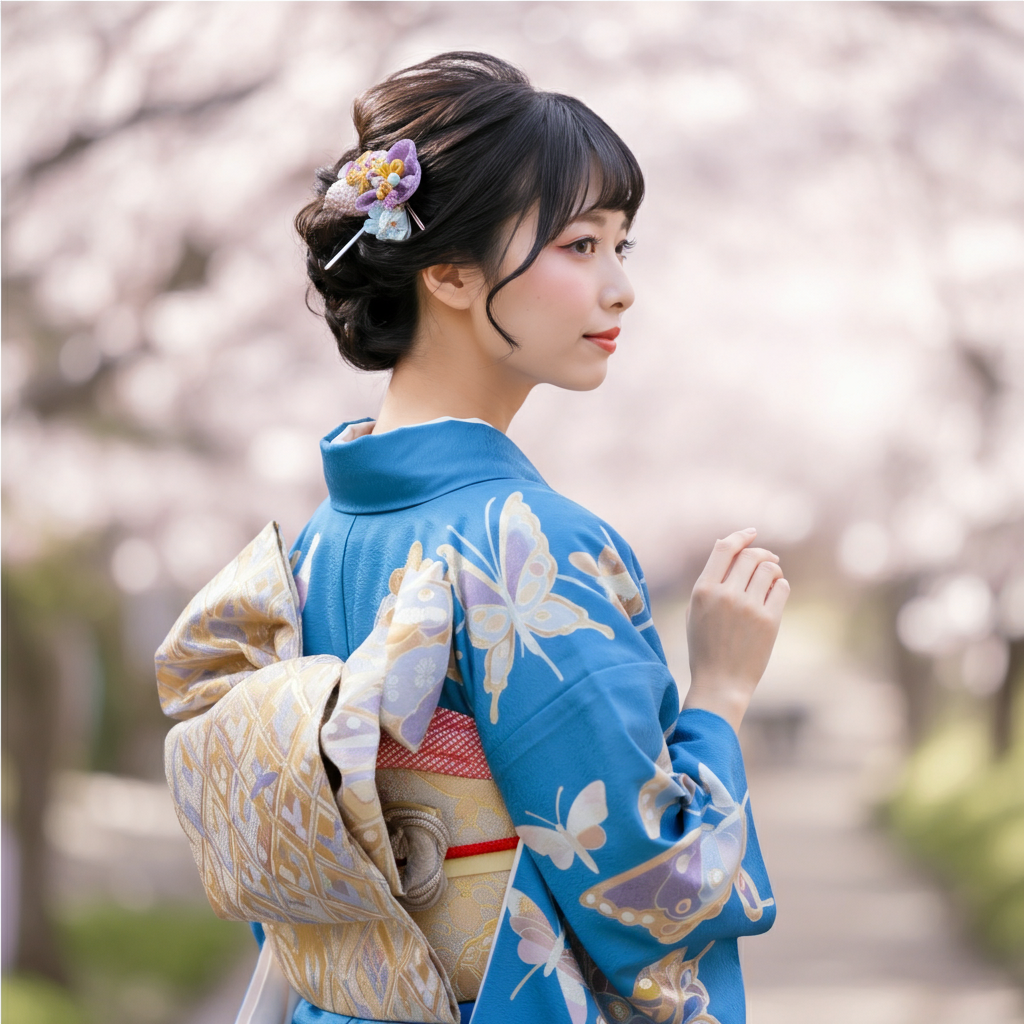
With its delicate form and gentle, dancing flight, the butterfly is a powerful emblem of feminine beauty and elegance. Its association with grace makes it one of the most beloved Japanese kimono patterns. A butterfly kimono doesn’t just adorn the wearer; it imbues her with an aura of refinement and gentle strength. This symbolism dates back centuries, with courtly ladies of the Heian period (794–1185) admiring butterflies as representations of ideal feminine charm.
The Beauty of Impermanence: Mono no Aware
Perhaps the most uniquely Japanese interpretation of the butterfly is its connection to mono no aware (物の哀れ). This philosophical concept translates roughly to “the pathos of things” or an awareness of the transient, impermanent nature of life. The butterfly lives for only a short time, yet its existence is one of incredible beauty.
This serves as a reminder to cherish the present moment and find beauty in its fleetingness. Just as cherry blossoms are admired for their brief but spectacular bloom, the butterfly teaches an appreciation for ephemeral beauty. This concept, refined during the Edo period (1603-1868), is a cornerstone of Japanese aesthetics and gives the butterfly motif a deep, contemplative quality.
Love and Marital Bliss
When butterflies appear in pairs, their symbolism shifts to themes of love, partnership, and marital happiness. Two butterflies fluttering together are seen as a perfect picture of a joyful and harmonious union. For this reason, the paired butterfly motif is a popular choice for wedding attire, particularly on the bride’s uchikake (a formal, ornate outer kimono). A butterfly kimono worn at a wedding is a wish for a long, happy, and devoted life with one’s partner.
Butterflies on Kimono and Yukata: A Closer Look
The application of butterfly motifs on traditional garments is a deliberate art form. The type of garment, the season, and the occasion all influence the design.
The Elegance of the Butterfly Kimono
A butterfly kimono can be worn for various formal and semi-formal occasions. The design’s execution—from fabric to placement—speaks volumes.
- Occasions: Butterfly motifs are especially appropriate for celebratory events like weddings, tea ceremonies, and spring festivals. They signify joy, new beginnings, and refined beauty.
- Fabric and Design: On formal kimonos like furisode (long-sleeved kimono for unmarried women) or hōmongi (visiting wear), butterflies are often rendered in exquisite detail using techniques like yūzen dyeing or embroidery. The patterns may be scattered across the sleeves and hem or featured as a central design element.
- Color Symbolism: The colors used can add another layer of meaning. Red and gold butterflies might signify luck and prosperity, while purple and white combinations evoke a sense of high elegance.
The Joyful Spirit of the Butterfly Yukata
The butterfly yukata, a lighter cotton garment for summer, embodies a more carefree spirit.
- Occasions: A butterfly yukata is perfect for summer festivals (matsuri), fireworks displays, and casual summer outings. Its connection to nature and joy makes it a festive favorite.
- Fabric and Design: Yukata designs are typically printed rather than hand-dyed. Butterfly patterns are often stylized and combined with other summer motifs like morning glories or flowing water, creating a vibrant and energetic look. The lightweight cotton is designed for comfort in warm, humid weather.
- Modern Loungewear: Today, this beautiful symbolism extends to modern loungewear inspired by traditional robes. These pieces blend the comfort of relaxed silhouettes with the rich artistic heritage of Japanese kimono patterns, allowing you to enjoy this cultural elegance every day. See our Loungewear Collection.
Choosing Your Motif: Butterflies vs. Other Patterns
When selecting a kimono or yukata, you’ll encounter many beautiful Japanese kimono patterns. Understanding how butterflies compare to other popular motifs can help you choose the one that speaks to you.
- Butterflies vs. Sakura (Cherry Blossoms): While both are tied to spring and the concept of mono no aware, butterflies represent dynamic transformation and personal growth. Sakura, on the other hand, symbolizes renewal and the collective beauty of a fleeting moment.
- Butterflies vs. Cranes (Tsuru): Cranes are symbols of longevity, good fortune, and fidelity, as they are believed to live for a thousand years and mate for life. They are a very auspicious and formal motif, often reserved for weddings. Butterflies offer a softer, more personal symbolism related to beauty, grace, and change.
Ultimately, the choice is personal. A butterfly kimono is ideal for someone celebrating personal transformation or wishing to express grace and joy.
How to Style Your Butterfly Kimono or Yukata
Wearing a traditional Japanese garment is an art. Here are some tips to help you style your piece with grace.
- Obi Selection: The obi (sash) is key to the overall look. For a multi-colored butterfly kimono, pick a dominant color from the pattern for your obi to create a cohesive look. Alternatively, choose a complementary color for a bold, modern statement. A yellow obi with a blue kimono, for instance, can be stunning.
- Accessories: Keep accessories simple to let the garment shine. A traditional kanzashi (hair ornament), perhaps with a subtle butterfly or floral motif, is a perfect touch. Pair with simple zōri (sandals) and a kinchaku (drawstring bag).
- Hairstyles: An elegant updo is traditional and practical, as it keeps your neck cool and showcases the beautiful collar of the kimono or yukata. Simple, clean hairstyles complement the intricate patterns.
Buyer’s Guide: Finding the Perfect Piece
When investing in a butterfly kimono or butterfly yukata, consider these factors:
- Fit: Traditional garments are sized differently. Pay attention to the mitake (length from shoulder to hem) and yuki (sleeve span). Most can be adjusted with the obi.
- Fabric: Silk is for a formal kimono, offering a luxurious drape. Cotton is standard for yukata, prized for its breathability. Modern pieces may use blends like cotton-satin or rayon for easy care.
- Craftsmanship: Look at the quality of the print or embroidery. Even on printed yukata, crisp lines and vibrant colors are a sign of good quality.
- Care: Check the care instructions. Silk kimonos require professional cleaning, while most cotton yukata can be hand-washed or machine-washed on a delicate cycle.
A Note on Cultural Etiquette
Wearing a kimono or yukata is a way of appreciating Japanese culture. To do so respectfully, ensure you are wearing it correctly. The most critical rule is to always wrap the left side over the right side. The opposite (right over left) is reserved for dressing the deceased for burial.
Frequently Asked Questions
1. What does a butterfly mean on a kimono?
A butterfly on a kimono carries several meanings. It most often symbolizes feminine beauty, grace, and personal transformation. When shown in pairs, butterflies represent marital bliss and a happy union. The butterfly symbolism in Japanese culture is rich, also connecting the insect to the soul and the joyful spirit of summer.
2. Is a butterfly yukata appropriate for festivals?
Absolutely. A butterfly yukata is a perfect choice for summer festivals (matsuri). The butterfly is a symbol of joy, summer, and carefree beauty, which aligns perfectly with the festive atmosphere. It’s a very popular and appropriate motif.
3. What are the best colors for butterfly motifs?
There are no “wrong” colors, as it depends on the desired mood. Bright colors like red, pink, and yellow create a youthful and joyful feeling. Deeper colors like indigo, purple, and black lend an air of sophistication and elegance. The background color of the fabric is just as important in setting the overall tone.
4. Can men wear butterfly patterns?
Traditionally, butterfly motifs are considered feminine and are almost exclusively found on women’s garments. Men’s kimono patterns tend to feature geometric designs, landscapes, or more “masculine” symbols like dragons or tigers.
Embrace the Beauty of Transformation
The butterfly is more than a pattern; it is a piece of poetry you can wear. It tells a story of change, beauty, and the quiet wisdom of appreciating every moment. The rich butterfly symbolism in Japanese culture adds a layer of depth and meaning, transforming a beautiful garment into a personal statement.
Are you ready to find the design that reflects your own journey? Explore our curated collection of butterfly-themed kimonos, yukata, and loungewear, and let this timeless symbol of elegance become a part of your story.