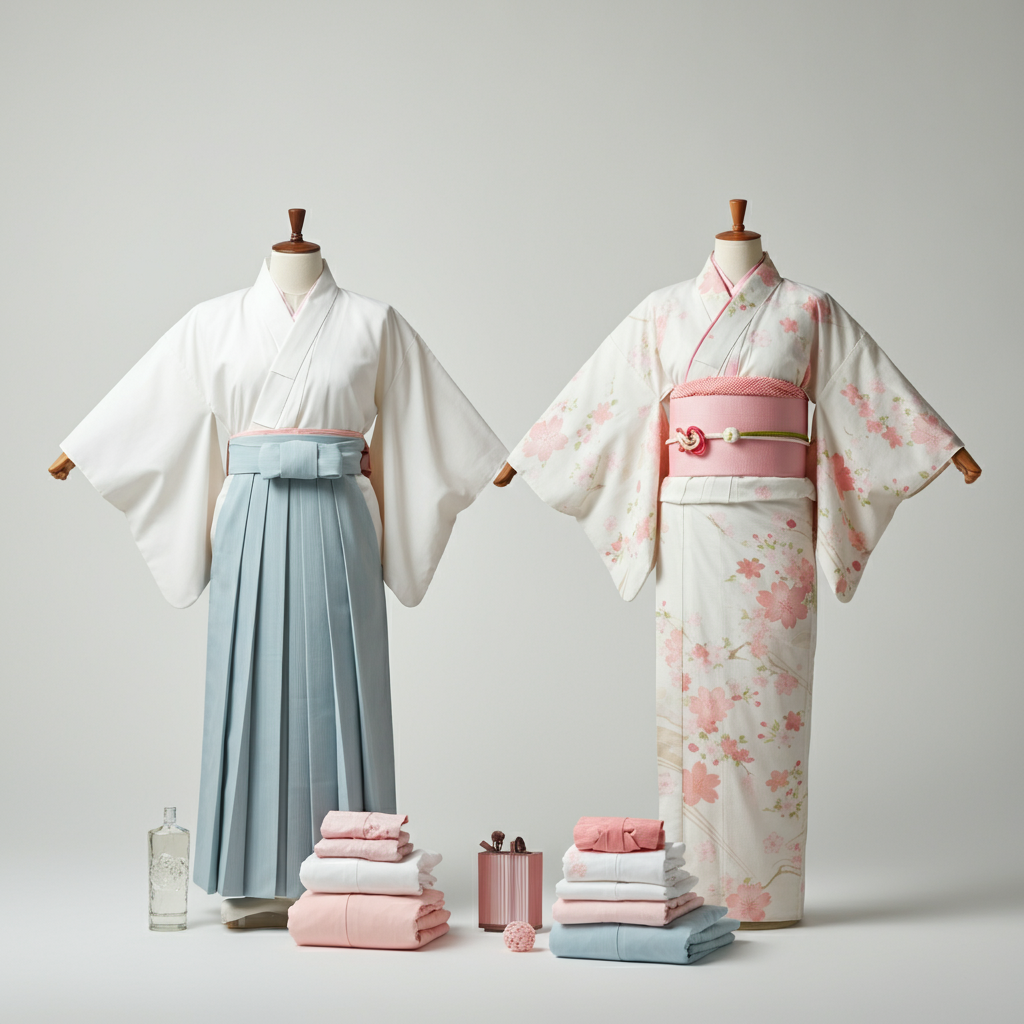
Japan is a country where geography and artistry are intricately intertwined. Travel from the snowy peaks of Ishikawa to the tropical islands of Kagoshima, and you will find that the local textiles tell the story of the land itself. The history of the kimono is not just about fashion; it is a tapestry of regional techniques passed down through centuries of dedicated artisans.
For enthusiasts of Japanese culture and textile art, understanding these regional differences unlocks a deeper appreciation of the craft. It transforms a beautiful garment into a map of history, climate, and local pride.
In this guide, we will journey through three of Japan’s most celebrated textile traditions: the opulent weaves of Kyoto’s Nishijin-ori, the intricate mud-dyed silks of Oshima Tsumugi, and the breathtaking hand-painted artistry of Kaga Yuzen. Each represents a different pinnacle of Japanese craftsmanship, preserving ancient skills in a modern world.
Nishijin-ori: The Brocade of Emperors
When you imagine a dazzling, gold-flecked obi sash worn at a formal wedding, you are likely picturing Nishijin-ori. Originating in the Nishijin district of Kyoto, this weaving style is synonymous with luxury, high status, and incredible complexity.
A History Woven in Kyoto
The roots of Nishijin weaving go back over 1,200 years, flourishing when Kyoto became the imperial capital in 794. The area became a hub for weavers supplying the Imperial Court and aristocracy. The name “Nishijin” (meaning “Western Camp”) actually dates back to the Onin War in the 15th century, when displaced weavers returned to the site of the western army’s encampment to restart their trade.
The Technique: Painting with Thread
Nishijin-ori is not a single technique but a collection of complex weaving methods. Its defining characteristic is the use of pre-dyed yarns to create elaborate patterns directly into the fabric, rather than dyeing the fabric afterward.
- Jacquard Power: Modern Nishijin often uses Jacquard looms, but the most prestigious pieces are still hand-woven.
- Gold and Silver: A signature element is the heavy use of gold and silver foil threads, giving the fabric a three-dimensional, luminous quality.
- Precision: Some patterns are so intricate they resemble paintings. The weaver must manually lift specific warp threads to insert the weft, a process that can take days to produce just a few centimeters of fabric.
Modern Relevance
Today, Nishijin-ori is the gold standard for formal obi (maru obi and fukuro obi) and kimono. However, the industry is innovating to survive. You can now find Nishijin techniques applied to luxury neckties, interior decor, and even high-end western accessories, proving that this ancient courtly style can adapt to contemporary life.
Oshima Tsumugi: The Mud-Dyed Masterpiece
Far from the imperial courts of Kyoto lies the island of Amami Oshima in Kagoshima Prefecture. Here, artisans create Oshima Tsumugi, a textile that looks deceptively simple from a distance but reveals mind-blowing complexity up close.
Born from Nature
Oshima Tsumugi is a type of silk pongee (woven from spun raw silk). Despite being 100% silk, it doesn’t have the glossy sheen of satin. Instead, it is matte, lightweight, and incredibly wrinkle-resistant. Historically, it was a durable fabric for everyday wear, but the immense labor involved has elevated it to a status of luxury.
The Process: Mud and Ikat
The creation of Oshima Tsumugi is unique in the world of textiles, relying on a specific combination of local flora and geology.
- Teichigi Dyeing: Threads are dipped hundreds of times in a dye made from the Japanese hawthorn (Teichigi) tree, turning them red.
- Mud Dyeing (Dorozome): This is the magic step. The red threads are immersed in the iron-rich mud of local rice paddies. The iron reacts with the tannins in the wood dye, turning the silk a deep, rich, lacquer-black. This process also strengthens the fiber, making it incredibly durable.
- Kasuri (Ikat) Weaving: Before weaving, threads are spot-dyed to create white dots. When woven, these dots must align perfectly to form precise geometric patterns. This technique, known as kasuri, requires mathematical precision. A single millimeter of error can ruin the pattern.
Why It Matters
Authentic Oshima Tsumugi takes anywhere from six months to a year to produce. It is often called the “queen of kimono textiles” for casual wear. It represents a harmony between the artisan and the island’s unique natural resources—a fabric that literally could not exist anywhere else.
Kaga Yuzen: The Art of Realistic Beauty
Moving north to Kanazawa in Ishikawa Prefecture, we find Kaga Yuzen. While Kyoto has its own famous dyeing style (Kyo Yuzen), the Kaga style offers a different aesthetic philosophy—one grounded in realism and the quiet beauty of nature.
The Kaga Aesthetic
Established in the mid-17th century, Kaga Yuzen is a dyeing technique used to paint patterns directly onto silk cloth. Unlike the stylized, often gold-embellished designs of Kyoto, Kaga Yuzen focuses on Kaga Gosai—five specific colors: indigo, crimson, ocher, grass green, and ancient purple.
Techniques of the Trade
The hallmark of Kaga Yuzen is bokashi, or shading. Artisans use this gradient technique to give depth to flowers and leaves, making them look almost photographic.
- Worm-Eaten Leaves: A unique and charming feature of Kaga Yuzen is the depiction of “mushikui”—leaves that appear to be eaten by insects. This embraces the Japanese aesthetic of wabi-sabi, finding beauty in imperfection and the natural cycle of life.
- No Gold: Unlike Kyoto styles, which often feature gold leaf or embroidery, Kaga Yuzen relies solely on the mastery of the dyeing brush. The luxury comes from the painterly skill, not the addition of precious metals.
Cultural Significance
Kaga Yuzen kimonos are prized for their elegance and dignity. They are often worn for tea ceremonies and formal visits. The craft demands patience; a single artist often oversees the entire process from sketching the design to the final wash, ensuring a singular artistic vision remains intact.
Conclusion: Wearing History
Whether it is the dazzling brocade of Nishijin, the earthy resilience of Oshima Tsumugi, or the painterly grace of Kaga Yuzen, these traditions are more than just methods of making cloth. They are the identities of their regions.
In a world of fast fashion, these textiles remind us of the value of slowness. They speak of artisans who dedicate their lives to mastering a single craft, and of a culture that sees clothing not as disposable, but as a vessel for history, nature, and art. Owning or even just witnessing these fabrics is a way to keep these vibrant stories alive.
Frequently Asked Questions (FAQ)
1. What is the difference between Nishijin-ori and regular silk?
Nishijin-ori refers specifically to high-end woven textiles from the Nishijin district in Kyoto. Unlike printed silk, Nishijin fabrics have patterns woven directly into the cloth using pre-dyed threads, often including gold and silver foil, creating a textured, brocade-like finish.
2. Can Oshima Tsumugi be worn for formal occasions?
Traditionally, no. Despite being expensive and highly prized, Oshima Tsumugi is a type of tsumugi (woven, spun silk), which is considered casual wear in kimono etiquette. It is perfect for dinner parties, theater outings, or casual gatherings, but not for formal weddings.
3. Why is Kaga Yuzen painted with “imperfections” like bug bites?
The “worm-eaten leaf” motif (mushikui) is a signature of the Kaga Yuzen style. It reflects a realistic observation of nature and the aesthetic of finding beauty in natural, imperfect states, distinguishing it from the more idealized or stylized nature motifs found in Kyoto designs.
4. Are these traditional textiles still being made today?
Yes, but the number of skilled artisans is declining. Each of these traditions requires decades of training. While production volume has decreased, dedicated associations and master craftsmen in Kyoto, Kagoshima, and Ishikawa continue to produce these masterpieces and train the next generation.
Visit Kimono Shop online for a peek at the fine selection of Japanese Kimonos, Yukata, and short-length kimonos, known as the Happi Coat. Kimono Shop ships from the USA and offers a wide selection of colors, patterns, and sizes.
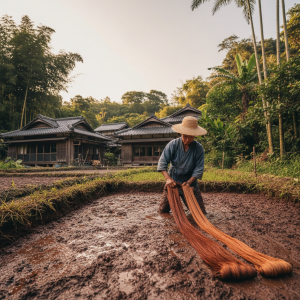
Mud Dyeing Process