
Tag: Kimono artistry

  • Explore Japan’s Textiles: an Inside Look at Regional Fabrics

    Japan is a country where geography and artistry are intricately intertwined. Travel from the snowy peaks of Ishikawa to the tropical islands of Kagoshima, and you will find that the local textiles tell the story of the land itself. The history of the kimono is not just about fashion; it is a tapestry of regional techniques passed down through centuries of dedicated artisans.

    For enthusiasts of Japanese culture and textile art, understanding these regional differences unlocks a deeper appreciation of the craft. It transforms a beautiful garment into a map of history, climate, and local pride.

    In this guide, we will journey through three of Japan’s most celebrated textile traditions: the opulent weaves of Kyoto’s Nishijin-ori, the intricate mud-dyed silks of Oshima Tsumugi, and the breathtaking hand-painted artistry of Kaga Yuzen. Each represents a different pinnacle of Japanese craftsmanship, preserving ancient skills in a modern world.

    Nishijin-ori: The Brocade of Emperors

    When you imagine a dazzling, gold-flecked obi sash worn at a formal wedding, you are likely picturing Nishijin-ori. Originating in the Nishijin district of Kyoto, this weaving style is synonymous with luxury, high status, and incredible complexity.

    A History Woven in Kyoto

    The roots of Nishijin weaving go back over 1,200 years, flourishing when Kyoto became the imperial capital in 794. The area became a hub for weavers supplying the Imperial Court and aristocracy. The name “Nishijin” (meaning “Western Camp”) actually dates back to the Onin War in the 15th century, when displaced weavers returned to the site of the western army’s encampment to restart their trade.

    The Technique: Painting with Thread

    Nishijin-ori is not a single technique but a collection of complex weaving methods. Its defining characteristic is the use of pre-dyed yarns to create elaborate patterns directly into the fabric, rather than dyeing the fabric afterward.

    • Jacquard Power: Modern Nishijin often uses Jacquard looms, but the most prestigious pieces are still hand-woven.
    • Gold and Silver: A signature element is the heavy use of gold and silver foil threads, giving the fabric a three-dimensional, luminous quality.
    • Precision: Some patterns are so intricate they resemble paintings. The weaver must manually lift specific warp threads to insert the weft, a process that can take days to produce just a few centimeters of fabric.

    Modern Relevance

    Today, Nishijin-ori is the gold standard for formal obi (maru obi and fukuro obi) and kimono. However, the industry is innovating to survive. You can now find Nishijin techniques applied to luxury neckties, interior decor, and even high-end western accessories, proving that this ancient courtly style can adapt to contemporary life.

    Oshima Tsumugi: The Mud-Dyed Masterpiece

    Far from the imperial courts of Kyoto lies the island of Amami Oshima in Kagoshima Prefecture. Here, artisans create Oshima Tsumugi, a textile that looks deceptively simple from a distance but reveals mind-blowing complexity up close.

    Born from Nature

    Oshima Tsumugi is a type of silk pongee (woven from spun raw silk). Despite being 100% silk, it doesn’t have the glossy sheen of satin. Instead, it is matte, lightweight, and incredibly wrinkle-resistant. Historically, it was a durable fabric for everyday wear, but the immense labor involved has elevated it to a status of luxury.

    The Process: Mud and Ikat

    The creation of Oshima Tsumugi is unique in the world of textiles, relying on a specific combination of local flora and geology.

    1. Teichigi Dyeing: Threads are dipped hundreds of times in a dye made from the Japanese hawthorn (Teichigi) tree, turning them red.
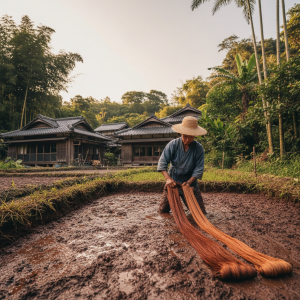
    2. Mud Dyeing (Dorozome): This is the magic step. The red threads are immersed in the iron-rich mud of local rice paddies. The iron reacts with the tannins in the wood dye, turning the silk a deep, rich, lacquer-black. This process also strengthens the fiber, making it incredibly durable.
    3. Kasuri (Ikat) Weaving: Before weaving, threads are spot-dyed to create white dots. When woven, these dots must align perfectly to form precise geometric patterns. This technique, known as kasuri, requires mathematical precision. A single millimeter of error can ruin the pattern.

    Why It Matters

    Authentic Oshima Tsumugi takes anywhere from six months to a year to produce. It is often called the “queen of kimono textiles” for casual wear. It represents a harmony between the artisan and the island’s unique natural resources—a fabric that literally could not exist anywhere else.

    Kaga Yuzen: The Art of Realistic Beauty

    Moving north to Kanazawa in Ishikawa Prefecture, we find Kaga Yuzen. While Kyoto has its own famous dyeing style (Kyo Yuzen), the Kaga style offers a different aesthetic philosophy—one grounded in realism and the quiet beauty of nature.

    The Kaga Aesthetic

    Established in the mid-17th century, Kaga Yuzen is a dyeing technique used to paint patterns directly onto silk cloth. Unlike the stylized, often gold-embellished designs of Kyoto, Kaga Yuzen focuses on Kaga Gosai—five specific colors: indigo, crimson, ocher, grass green, and ancient purple.

    Techniques of the Trade

    The hallmark of Kaga Yuzen is bokashi, or shading. Artisans use this gradient technique to give depth to flowers and leaves, making them look almost photographic.

    • Worm-Eaten Leaves: A unique and charming feature of Kaga Yuzen is the depiction of “mushikui”—leaves that appear to be eaten by insects. This embraces the Japanese aesthetic of wabi-sabi, finding beauty in imperfection and the natural cycle of life.
    • No Gold: Unlike Kyoto styles, which often feature gold leaf or embroidery, Kaga Yuzen relies solely on the mastery of the dyeing brush. The luxury comes from the painterly skill, not the addition of precious metals.

    Cultural Significance

    Kaga Yuzen kimonos are prized for their elegance and dignity. They are often worn for tea ceremonies and formal visits. The craft demands patience; a single artist often oversees the entire process from sketching the design to the final wash, ensuring a singular artistic vision remains intact.

    Conclusion: Wearing History

    Whether it is the dazzling brocade of Nishijin, the earthy resilience of Oshima Tsumugi, or the painterly grace of Kaga Yuzen, these traditions are more than just methods of making cloth. They are the identities of their regions.

    In a world of fast fashion, these textiles remind us of the value of slowness. They speak of artisans who dedicate their lives to mastering a single craft, and of a culture that sees clothing not as disposable, but as a vessel for history, nature, and art. Owning or even just witnessing these fabrics is a way to keep these vibrant stories alive.

    Frequently Asked Questions (FAQ)

    1. What is the difference between Nishijin-ori and regular silk?
    Nishijin-ori refers specifically to high-end woven textiles from the Nishijin district in Kyoto. Unlike printed silk, Nishijin fabrics have patterns woven directly into the cloth using pre-dyed threads, often including gold and silver foil, creating a textured, brocade-like finish.

    2. Can Oshima Tsumugi be worn for formal occasions?
    Traditionally, no. Despite being expensive and highly prized, Oshima Tsumugi is a type of tsumugi (woven, spun silk), which is considered casual wear in kimono etiquette. It is perfect for dinner parties, theater outings, or casual gatherings, but not for formal weddings.

    3. Why is Kaga Yuzen painted with “imperfections” like bug bites?
    The “worm-eaten leaf” motif (mushikui) is a signature of the Kaga Yuzen style. It reflects a realistic observation of nature and the aesthetic of finding beauty in natural, imperfect states, distinguishing it from the more idealized or stylized nature motifs found in Kyoto designs.

    4. Are these traditional textiles still being made today?
    Yes, but the number of skilled artisans is declining. Each of these traditions requires decades of training. While production volume has decreased, dedicated associations and master craftsmen in Kyoto, Kagoshima, and Ishikawa continue to produce these masterpieces and train the next generation.

    Visit Kimono Shop online for a peek at the fine selection of Japanese Kimonos, Yukata, and short-length kimonos, known as the Happi Coat. Kimono Shop ships from the USA and offers a wide selection of colors, patterns, and sizes.
    Mud Dyeing Process
  • How to Choose Your First Kimono: A Beginner’s Guide

    Choosing your first kimono is an exciting step into a world of incredible artistry, history, and personal expression. But with so many styles, fabrics, and terms, it can also feel a little overwhelming. This guide is here to walk you through everything you need to know, from finding the right fit to understanding the difference between a real silk treasure and a convincing replica.

    We will cover the essential factors: fit, fabric, budget, and authenticity. By the end, you’ll feel confident and ready to select a beautiful garment you can wear with respect and joy.

    First, Some Kimono Basics

    Before diving into the details, let’s clarify a few key terms you’ll encounter.

    • Kimono: The word “kimono” literally means “thing to wear.” It’s a T-shaped, full-length robe that wraps left over right. Traditional kimonos are often made of silk or cotton and worn for special occasions like weddings, tea ceremonies, or festivals.
    • Yukata: Think of a yukata as the kimono’s casual, summer cousin. It’s typically made of unlined cotton or synthetic fabric, making it lighter and more breathable. Yukata are perfect for summer festivals, relaxing at a traditional inn (ryokan), or as a beautiful bathrobe. They are an excellent, affordable starting point.
    • Haori: This is a hip- or thigh-length jacket worn over a kimono. It’s not belted shut and adds a layer of formality or warmth. Modern fashion has embraced the haori as a stylish, versatile jacket to wear with everyday clothes.

    Finding the Perfect Fit

    Unlike Western clothing, kimonos are not sold in standard sizes like small, medium, or large. Fit is determined by your height and, to a lesser extent, your hip measurement.

    Key Measurements to Check

    • Length (Mitake): A kimono’s length should be roughly equal to your height. The excess fabric is folded at the waist and hidden by the obi (sash), a fold called the ohashori. For a casual yukata, the length can be closer to your ankle without this fold.
    • Sleeve Length (Sodetake): The bottom of the sleeve should fall somewhere around your wrist when your arms are down. Long, flowing sleeves are a feature of furisode, a formal kimono for unmarried women.
    • Width (Mihaba): The kimono should wrap around your body comfortably, with the front panels overlapping. When you hold the center back seam against your spine, the edges of the robe should wrap to your hip bones. Most kimonos can accommodate a range of body shapes.
    • Sleeve Drop (Yuki): This is the measurement from the center seam of your neck to the edge of the sleeve. It should end near your wrist bone. If it’s too short, it can look ill-fitting, but vintage pieces often have a shorter yuki.

    When trying on a kimono, make sure the left side is wrapped over the right side. Wrapping right over left is reserved for dressing the deceased for burial—a crucial piece of etiquette to remember.

    A Guide to Kimono Fabrics

    The material of a kimono dictates its formality, seasonality, and care requirements.

    • Silk (Shoken): The most traditional and luxurious fabric. It’s smooth, drapes beautifully, and is used for formal kimonos like furisode and tomesode. Silk is a year-round fabric, but different weaves are used for different seasons. It requires professional cleaning.
    • Cotton (Momen): The classic fabric for yukata. It’s breathable, absorbent, and relatively easy to wash at home, making it perfect for summer.
    • Wool (Uru): A durable, warm, and wrinkle-resistant fabric. Wool kimonos are considered casual and are ideal for everyday wear in the cooler autumn and winter months.
    • Linen/Hemp (Asa): Crisp, breathable, and highly prized for summer wear. Linen kimonos are a bit more upscale than cotton yukata and are perfect for staying cool in humid weather.
    • Polyester & Synthetics: Modern kimonos are often made from high-quality polyester. It’s a fantastic option for beginners because it’s affordable, wrinkle-resistant, and machine-washable. While it doesn’t breathe as well as natural fibers, its ease of care is a major advantage.

    Setting Your Budget: New vs. Vintage

    Your budget will be a major factor in your decision. Prices can range from under $50 to many thousands of dollars.

    • Under $100: In this range, you’ll find new polyester yukata sets (often including a simple obi and geta sandals) or secondhand wool and synthetic kimonos. This is a great budget for your very first piece.
    • $100 – $400: This tier opens up the world of high-quality vintage silk kimonos (komon, or small-pattern kimonos), new cotton yukata from good brands, and some simpler new silk pieces.
    • $400+: Here you can find pristine vintage kimonos, artisan-made pieces, and new silk kimonos. Bespoke, hand-dyed kimonos can cost several thousand dollars.

    How to Spot an Authentic, Quality Kimono

    Authenticity can mean different things—is it handmade in Japan, or is it a well-made modern piece? Here are some clues to look for.

    • Pattern Alignment: On a quality kimono, patterns should flow seamlessly across the seams, especially on the back.
    • Lining: Most kimonos, except for unlined summer ones (hitoe), will have a lining. A fully lined kimono is called awase. The lining is often made of silk or cotton.
    • Seams: Look at the construction. A traditional kimono has specific seam placements and is mostly hand-stitched, especially for hemming. Machine stitching is common on modern or everyday kimonos.
    • Artisan Techniques: Look for signs of hand-dyeing like shibori (tie-dye), which leaves tiny, puckered dots, or yuzen (resist dyeing), which has fine, hand-painted details. These indicate a high-value, artisanal piece.
    • Red Flags: Be wary of shiny, cheap satin fabrics, printed patterns that don’t align at the seams, and garments marketed as “kimono robes” that are more like lingerie or dressing gowns.

    Where to Buy Your First Kimono

    • New: Department stores in Japan or specialty online retailers.
    • Vintage: Flea markets (especially in Japan), vintage kimono stores, and online marketplaces like Kimono Shop. Be sure to check seller reviews and measurements.
    • Rental: An excellent option for a special event. Kimono rental shops are common in tourist areas in Japan and some large cities worldwide. They handle the dressing and provide all accessories.

    Essential Kimono Accessories

    A kimono is rarely worn on its own. You’ll need a few key items to complete the look correctly.

    1. Obi: The sash worn around the waist. There are many types, from the casual hanhaba obi for yukata to the formal, elaborate fukuro obi.
    2. Koshihimo: Thin ties used to hold the kimono in place under the obi. You’ll need at least two.
    3. Juban: An under-kimono. It keeps the outer kimono clean and provides a clean collar line (eri). A full-length nagajuban or a simpler two-piece version works.
    4. Obi-ita: A stiff board placed inside the obi to keep it from wrinkling.
    5. Footwear: Zori are formal sandals, while geta are wooden clogs typically worn with yukata. Always wear tabi (split-toe socks) with zori.

    Simple Care and Storage

    • Airing: After wearing, hang your kimono on a special kimono hanger or a straight rod in a well-ventilated, shady area for a day to air out.
    • Cleaning: Polyester and cotton can often be hand-washed or machine-washed on a delicate cycle. Silk and wool must be professionally cleaned by a specialist.
    • Storage: Store your folded kimono flat, wrapped in a traditional paper wrapper called a tatoshi, or a simple cotton cloth. Keep it in a drawer or box away from direct sunlight and humidity.

    Kimono Shop has been a leading online provider of quality Kimono and Yukata since 19949. They offer a wide selection of colors, styles, and patterns. Whether for a man, woman, or child, sizes are available in small, large, tall, petite, plus size, big and tall, and short length. Visit the Kimono Shop online 24 hours a day. Based and operated in the USA, shipping is always quick, and service is professional.

  • Why Quality Matters: The Story Behind Our Kimonos

    There’s a reason why kimonos are celebrated worldwide as not just garments but works of art. They carry cultural heritage, showcase remarkable craftsmanship, and boast intricate designs that stand the test of time. At the heart of every kimono lies an unwavering commitment to quality. But what truly makes kimonos special? Join us as we explore the meticulous process of creation, the artisanship behind each piece, and what makes these timeless garments treasures to own.

    The Cultural Significance of Kimonos

    Kimonos are more than just clothing; they are a cultural symbol in Japan. Historically, they represented the wearer’s social status, personality, and individuality. Each detail on a kimono, from the patterns to the choice of fabric, carries specific meaning. For instance, floral motifs often reflect the seasons, with cherry blossoms signifying spring and chrysanthemums symbolizing longevity.

    Beyond their wearable beauty, kimonos are deeply tied to rituals and milestones—weddings, tea ceremonies, and coming-of-age celebrations. Every kimono tells a story, making each piece a priceless heirloom to be passed down through generations.

    Sourcing Materials with Purpose

    Creating a kimono starts with selecting the finest materials. Quality kimonos are traditionally made from pure silk, an unmatched fabric for elegance, durability, and dye absorption. This material provides the perfect canvas for intricate patterns and vibrant colors.

    Today, while silk remains a primary choice for formal kimonos, other materials such as cotton and wool are also used for casual wear. Regardless of the fabric, the emphasis is always on longevity and preserving the authenticity of traditional methods.

    The dyeing process further elevates the material’s beauty. Artisans use natural dyes to achieve hues that are not only vivid but environmentally sustainable. These dyes require skillful precision, as the process can take days—or even weeks—to yield the perfect shades.

    The Artisans at Work

    Creating a kimono is not a single-person effort. It involves a collaborative process that brings together seasoned artisans, each with a specialized skill. Here’s how the remarkable team behind a kimono works their magic:

    1. Pattern Designers

    These artists sketch the kimono’s motif, ensuring every line and shape aligns with the garment’s cultural significance. Their designs blend tradition with innovation, resulting in patterns that appeal to modern tastes while staying true to heritage.

    2. Weavers

    Once the design is finalized, the weavers bring it to life on looms. Using complex weaving techniques like nishijin-ori (a Kyoto specialty), they create textiles that are both robust and delicate. Depending on the pattern’s complexity, this step can take months.

    3. Dyers

    The fabric then goes to the dyers, who use age-old methods like yuzen dyeing. This painstaking process involves painting designs freehand with rice paste resist, followed by multiple dye baths to achieve each vibrant hue.

    4. Sewers and Finishers

    Finally, master sewers assemble the kimono with precise, hand-stitched seams. Even here, no detail is overlooked. The alignment of patterns along the seams is carefully examined, ensuring the design flows seamlessly.

    The Meticulous Process of Creation

    From start to finish, crafting a kimono is nothing short of a labor of love. Here’s a glimpse into the process:

    • Fabric Preparation

    The act of preparing silk involves washing, stretching, and refining until it’s smooth yet durable, ready to take on patterns and dyes.

    • Dyeing and Pattern Creation

    The chosen design is transferred onto the fabric, either through hand-painting or stenciling. Artisans ensure every stroke, line, and motif is carefully rendered for a mesmerizing finish.

    • Cutting and Sewing

    A kimono is made from one continuous bolt of fabric called a tan. Each tan is meticulously cut so as to not waste an inch. The sewing process focuses not only on precision but also on symmetry, which is vital for the garment’s harmony.

    • Final Touches

    After rigorous inspection for quality, the kimono is steamed to remove creases and folded in the traditional manner, ready for wear or display.

    Why Quality Matters

    When you wear a kimono made with care and authenticity, you’re not just wearing a piece of clothing—you’re donning a legacy. High-quality craftsmanship means these garments can last for decades, maintaining their beauty and integrity. It’s no wonder vintage kimonos are highly sought after today.

    Beyond physical durability, the true value lies in the intangibles—the artisans’ dedication, the centuries-old techniques, and the stories embedded in the fabric. Quality ensures that every kimono is not just a product but a symbol of culture, artistry, and passion.

    The Timeless Appeal of Kimonos

    Despite modernization, the allure of a well-made kimono remains undeniable. Its timeless design seamlessly adapts to contemporary fashion while retaining its traditional essence. Styled casually or worn during formal occasions, a quality kimono transcends trends and generations, making it both fashionable and meaningful.

    Investing in a quality kimono isn’t just about owning a piece of clothing; it’s about appreciating a tradition that values artistry and excellence. It’s a commitment to preserving heritage and supporting the artisans who dedicate their lives to this remarkable craft.

    Final Thoughts

    The story behind kimonos is one of dedication, artistry, and cultural pride. Each piece is a testament to the beauty of craftsmanship, the significance of materials sourced with respect, and the history woven into every thread.

    When you choose a kimono that embodies quality, you’re not just investing in a garment—you’re choosing to honor tradition, support artisans, and celebrate timeless style. After all, true beauty lies in the details, and those details are what make a kimono truly unforgettable.